
Sectors
Defibrillators for
warehouses and industrial sites.
Long distances, physical work and shift patterns mean placement maths matters more here than almost anywhere else.
6 to 7 min
a possible round trip from the far racking to a single front-of-house device on a large site
Every minute
without CPR and defibrillation, the chance of survival falls by around 7 to 10 percent (published resuscitation research)
3am
a cardiac arrest on nights needs the same cover as one at midday
What we do
Cover that works at *warehouse scale*
Placement driven by travel time across zones, protected siting that suits the environment, and readiness on every shift including nights.
Zone-based placement
Devices distributed by travel time, weighted to loading bays and plant rooms.
Protected siting
Mounting and housing advice suited to dust, knocks and forklift traffic.
Checked every day
An automatic daily self-check, weekends included.
Every shift briefed
We help you build briefings so whoever is on site at 3am knows the first steps.
How we approach it
Risk, placement and *readiness*
What drives the risk on an industrial site, where devices should live when distance is the enemy, and how readiness survives shift patterns and weekends. Here is how we answer the three questions that matter.
01
The risk profile
Industrial settings combine physically demanding work with large floor areas and, often, an older skilled workforce. Distance is the danger: a single device in the office block at the front of a 100,000 sq ft warehouse can be a six or seven minute round trip from the far racking, which is outside the window where defibrillation is most effective. Night shifts and lone working add hours when fewer people are around to respond.
02
Where devices should live
We plan around travel time, not floor plans alone. That usually means devices distributed across zones so no workstation is more than a comfortable round trip away, with mounting points chosen for forklift-route visibility and clear signage that works at distance. Higher-risk areas such as loading bays, plant rooms and battery charging areas are weighted in the plan, and we advise on housing that suits the environment.
03
Keeping them ready
Shift patterns break informal checking rotas quickly, and a device that quietly failed on a Friday can sit unnoticed all weekend. Remote monitoring closes that gap: the device runs an automatic self-check every day, weekends included, and reports to us rather than waiting for someone to remember. We help you develop briefings that cover every shift, not just days, so the location and the basic response steps are known by whoever happens to be on site at 3am on a Sunday.
In practice
What it looks like *on the floor*
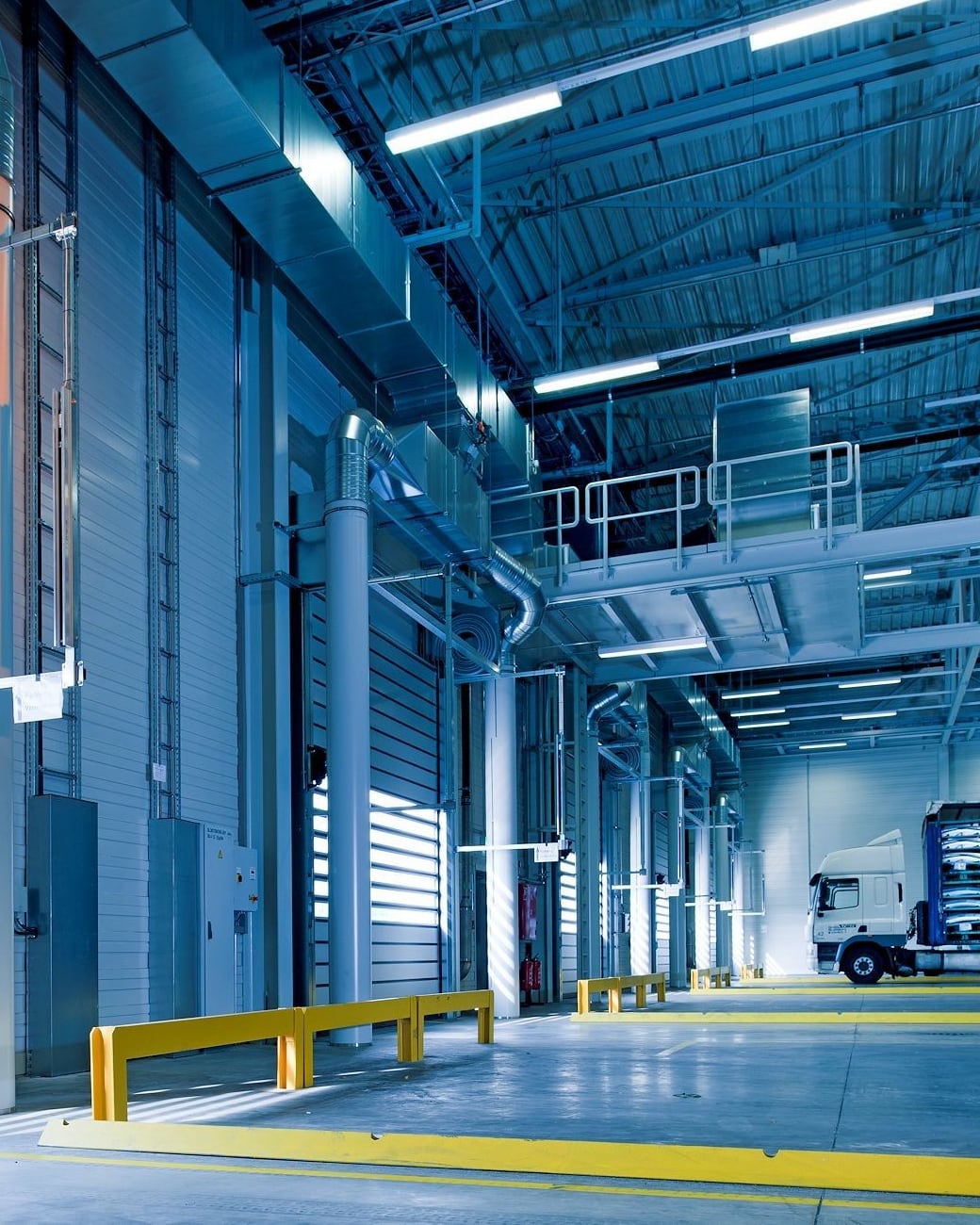
Devices mounted on the main routes, visible at distance, positioned so the far racking sits inside a comfortable round trip. Checked automatically every day, so a fault on Friday is picked up over the weekend rather than on Monday morning. Cover like this is worked out from your actual floor plan and shift pattern, not a template: travel times walked, higher-risk zones weighted, signage that reads from a forklift. Our free assessment shows you where your site stands.
See how ready your workplace is
Answer a few questions about your site and get an instant, indicative readiness result with clear next steps.
Try our assessment tool