Sectors
Defibrillators for
construction sites.
Sites change shape monthly, teams rotate weekly, and the welfare cabin moves. Cover has to be planned for movement, not a fixed floor plan.
Highest risk
construction usually records more worker deaths than any other UK sector (HSE annual figures)
Minutes further
ambulances take longer to reach sites behind hoarding or down unmade roads
Day one
every starter should hear where the defibrillator lives at induction
What we do
Cover that keeps up with a *changing site*
An anchor location every trade knows, housing suited to site conditions, and readiness that survives handovers and phase changes.
Welfare-unit anchor
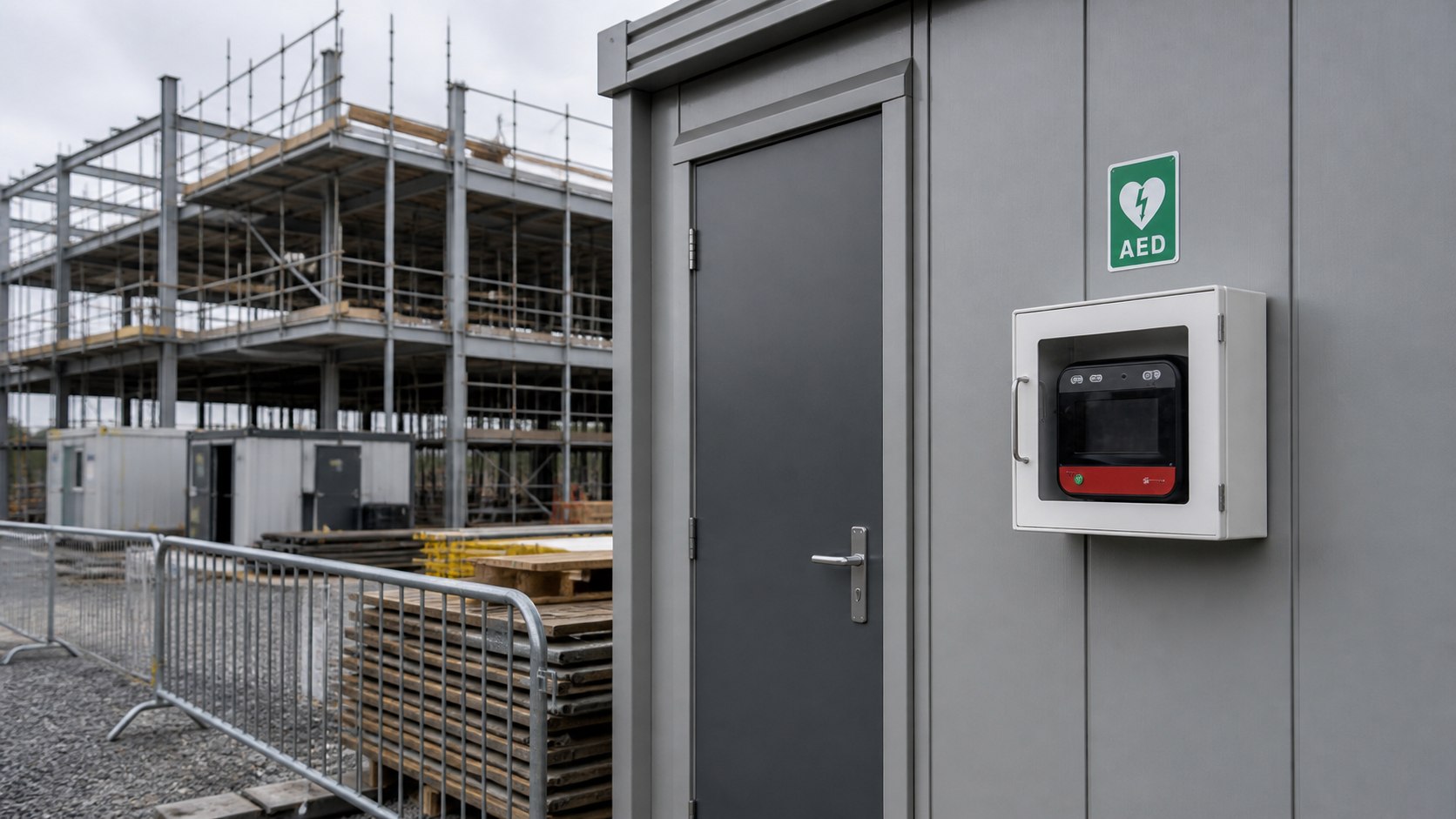
A known location on the induction plan, signed from the main routes.
Suited to site life
Housing advice that handles weather and site conditions.
Monitoring that travels
Readiness checked remotely, whoever runs the site this month.
Day-one inductions
A one-line induction item so every starter hears where the device lives.
How we approach it
Risk, placement and *readiness*
What makes cardiac arrest risk higher on site, where a device lives when the site itself keeps moving, and how readiness survives handovers and phase changes. Here is how we answer the three questions that matter.
01
The risk profile
Construction combines heavy physical exertion, an ageing workforce, and locations that are often hard for ambulances to reach quickly, from city-centre sites behind hoarding to rural plots at the end of unmade roads. The HSE consistently reports construction among the sectors with the highest rates of workplace fatalities, and cardiac events on site are part of that picture. Subcontractors who do not know the site add response time exactly when it matters.
02
Where devices should live
The device lives somewhere every trade knows and every phase keeps: usually the welfare unit or site office, marked on the site induction plan and signed from the main routes. On large or vertical sites we look at whether one location genuinely covers the far end of the works, and portable arrangements that move with the compound when the site reconfigures. We advise on rugged, weather-resistant housing suited to the conditions the site will throw at it.
03
Keeping them ready
Ownership is the construction problem: the person who checked the defibrillator last month may have moved to another job entirely. We help you build the device into site setup and handover paperwork, with monitoring that does not depend on any individual remembering, and a one-line induction item you can add so every new starter hears where it is on day one. Because the device is portable, the arrangement moves cleanly to the next site when this one closes out.
In practice
What it looks like *on site*
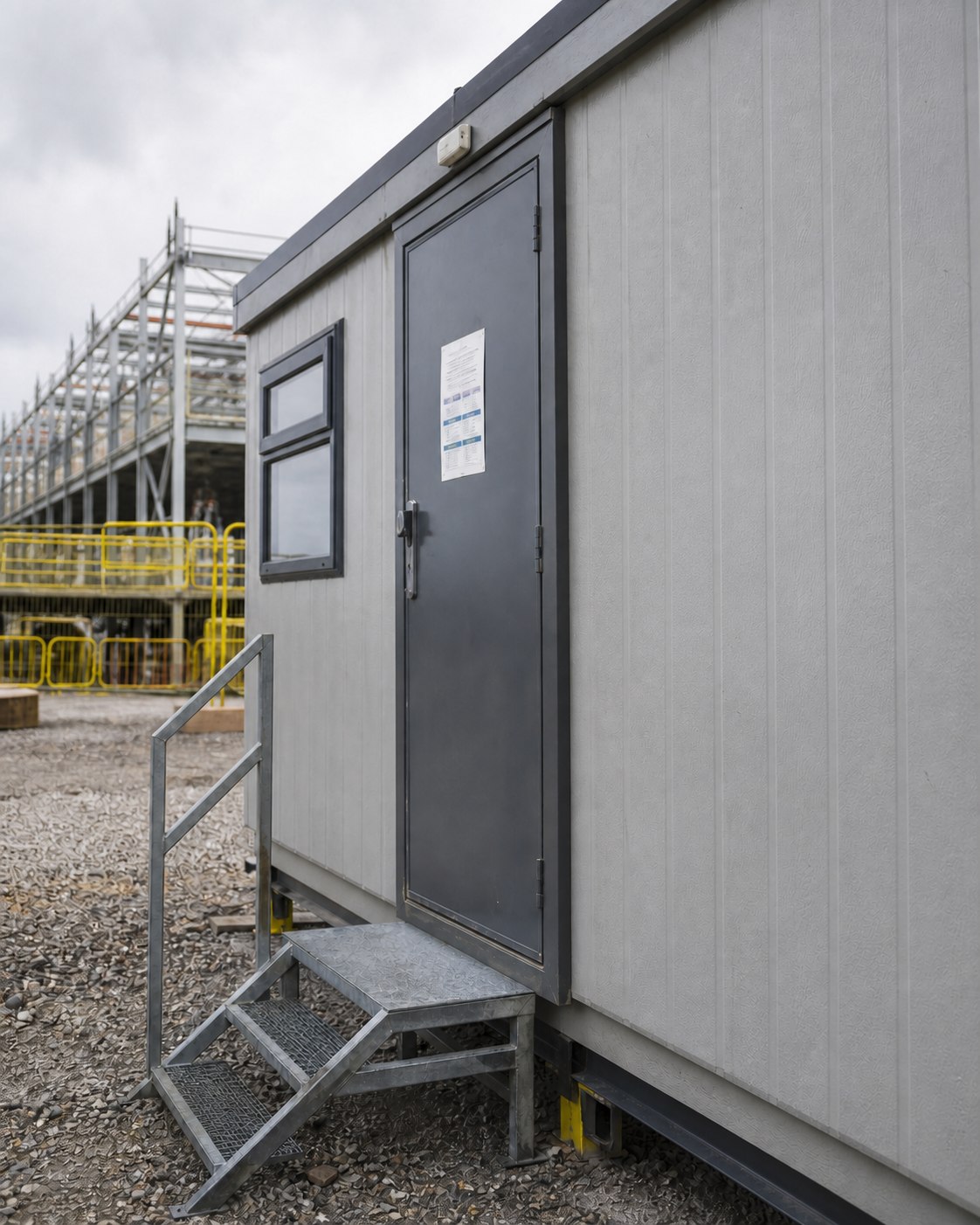
The device lives at the welfare unit, marked on the induction plan, in housing that suits the conditions. When the compound moves, it moves, and when the job closes out the whole arrangement travels to the next site. No repeat purchase, no orphaned kit left in a container, no gap in cover between phases. That is what protection built for construction looks like, and our free assessment shows you how to get your site there.
See how ready your workplace is
Answer a few questions about your site and get an instant, indicative readiness result with clear next steps.
Try our assessment tool